


1. Global Market Overview: The Paradigm Shift Toward Transparent Polymers
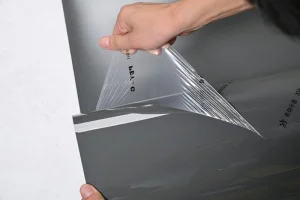
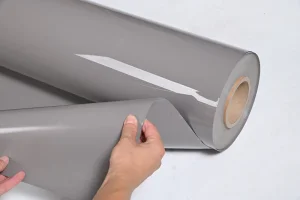
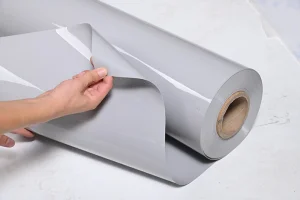
In modern industrial design, architectural interior finishing, and furniture manufacturing, the specification of material surface overlays has undergone a radical transformation. Historically dominated by traditional plasticizers and low-grade PVC laminates, global procurement intent has decisively migrated toward transparent high-performance polymer materials—most notably Polyethylene Terephthalate Glycol (PETG), tri-layer co-extruded GAG films, and optical-grade PET matrix sheets.
The global demand for high-quality transparent materials is driven by three primary commercial forces: stringent indoor air quality regulations banning toxic VOC and formaldehyde off-gassing, the market demand for depth-effect surface aesthetics (such as super-matte skin-feel surfaces and ultra-high-gloss 3D textures), and the operational necessity for high-speed industrial lamination using PUR (Polyurethane Reactive) hot-melt adhesives.
Optical transparency in industrial polymers is not merely visual clarity; it represents amorphous structural purity. Unlike standard crystalline polymers that scatter light, modified PETG and GAG co-extrusion films preserve photon transmission above 92%, while providing an impenetrable barrier against ultraviolet light, chemical yellowing, micro-scratches, and moisture absorption.
2. Material Science Comparison: PETG vs. GAG vs. PET vs. Traditional PVC
To assist global procurement officers, B2B importers, and interior panel manufacturers in selecting the precise substrate for their PUR flat paste sticking machinery, the technical parameters of various surface materials are systematically evaluated below:
| Polymer Property | PETG Decorative Film | GAG Co-Extruded Film | Optical Clear PET | Standard PVC Film |
|---|---|---|---|---|
| Chemical Composition | Polyethylene Terephthalate Glycol | APET Core with PETG Outer Layers | Biaxially Oriented PET | Polyvinyl Chloride + Plasticizers |
| Light Transmittance (Clear Cap) | > 92% (High Optical Clarity) | 90% - 92% | > 93% (Crystal Clear) | 78% - 85% (Hazy/Yellow Tint) |
| Surface Hardness Grade | 2H - 4H (Hard-Coated up to 6H) | 2H - 3H | 3H - 5H | HB - 1H (Scratch Prone) |
| Environmental & VOC Emission | Zero VOC / Food-Grade Safe | Zero VOC / Recyclable | Eco-Friendly / Food Contact Safe | Contains Phthalates & Chlorine |
| PUR Flat Paste Machine Compatibility | Exceptional Bonding Strength | Excellent (Cost-Optimized) | Superior Thermal Stability | Moderate (Risk of Heat Shrinkage) |
| Yellowing Resistance (Delta E < 1.0) | 10+ Years UV Resistance | 8-10 Years UV Stability | 12+ Years UV Resistance | Tends to Yellow within 2-3 Years |
3. China Factory Efficiency: Operational Superiority in Scale & Technical Precision
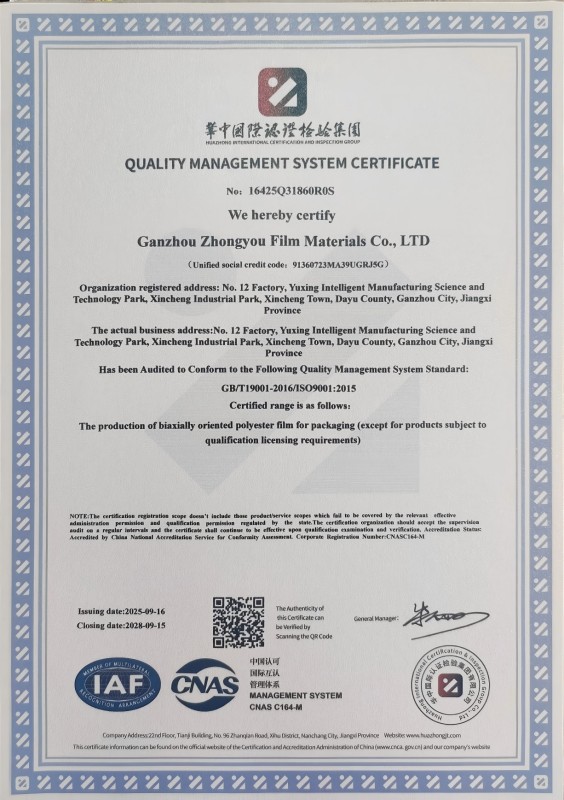
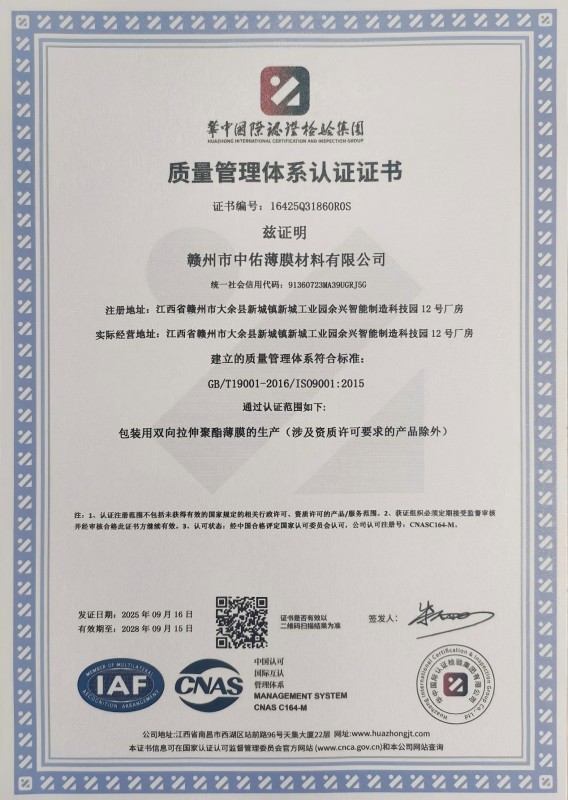
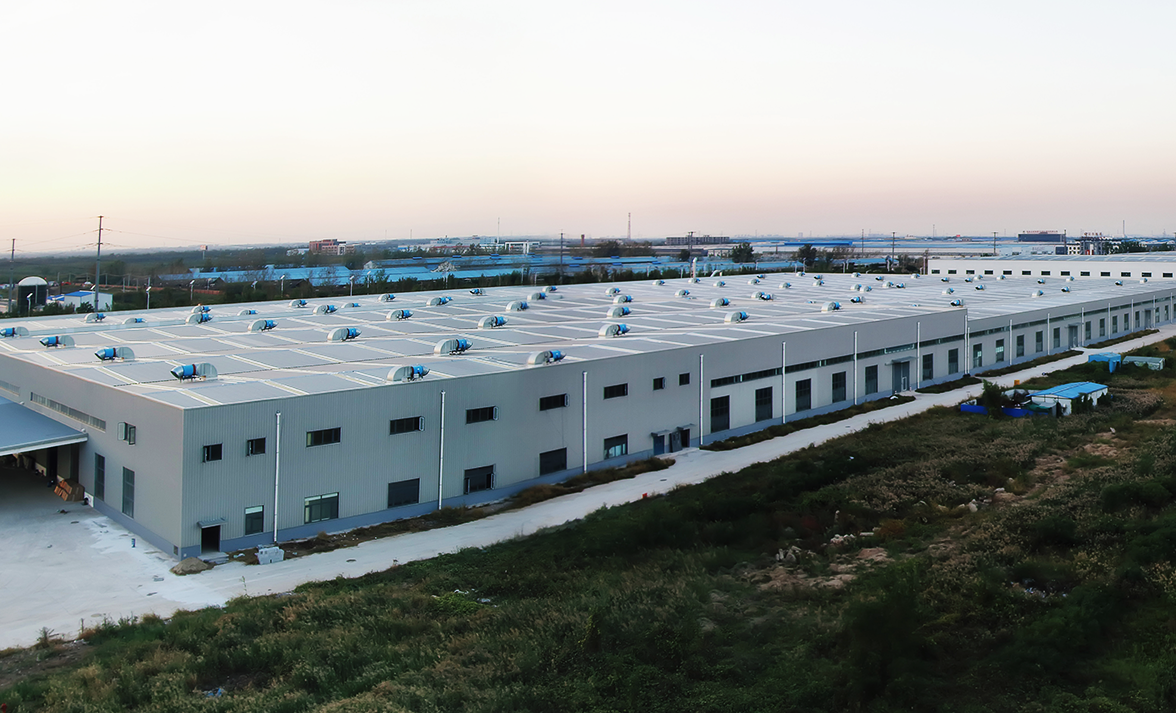
China has established itself as the global epicenter for precision film co-extrusion and functional coating. Operating within advanced manufacturing clusters such as Ganzhou, Jiangxi, facilities like Ganzhou Zhongyou Film Material Co., Ltd. provide international buyers with distinct supply chain advantages:
- Integrated Co-Extrusion & Precision Coating: Unlike regional converters that purchase base films from third parties, Zhongyou operates end-to-end production lines incorporating resin drying, extrusion compounding, multi-layer co-extrusion, high-vacuum curing, and precision anti-scratch hard coating.
- Class 100,000 Dust-Free Cleanroom Standards: High-transparency materials require absolute atmospheric purity. Minute airborne dust particles create micro-pinholes or optical distortions (fish eyes) under PUR flat lamination. Our 100,000-level cleanrooms ensure pristine defect-free surfaces.
- Rapid Customization & Color Matching: Utilizing digital spectrophotometers and automated gravure printing technology, Chinese factories can match solid colors, realistic wood grain decal overlays, marble textures, and ultra-matte tactile finishes in minimal turnaround times.
- Economy of Scale & Cost Competitiveness: Large-volume resin sourcing combined with 300+ automated production equipment units allows factory-direct pricing that significantly lowers BOM (Bill of Materials) costs for global furniture brands and architectural wall panel factories.
4. Localized Application Scenarios in Whole-House Customization & Architectural Engineering
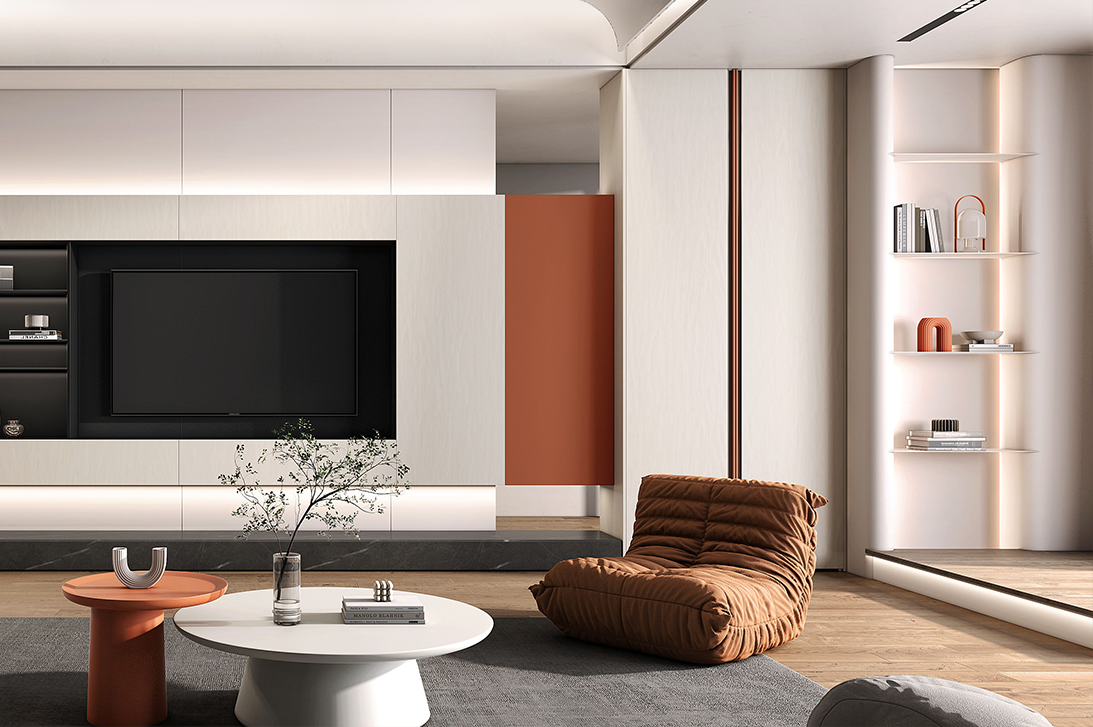
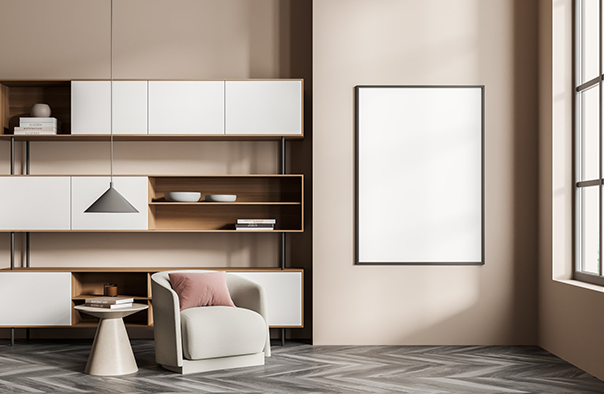
High-quality transparent materials serve diverse functions across residential, commercial, and industrial interior environments. Below are primary implementation domains where PETG, GAG, and PET decorative overlay films deliver transformative surface aesthetics:


A. PUR Flat Paste Lamination on MDF, Particleboard & Aluminum Honeycomb
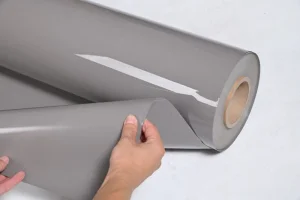
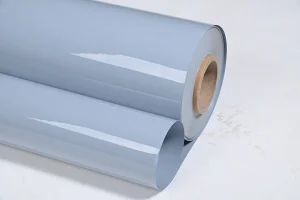
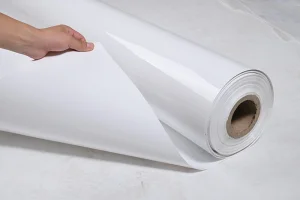
Modern flat sticking machinery utilizes PUR hot-melt adhesives operating at elevated temperatures. Transparent PETG and GAG films possess superior glass transition temperatures (Tg), preventing heat-induced deformation, micro-bubbling, or edge curling during continuous roll-to-board high-speed lamination.
B. Ultra-Matte "Skin-Feel" Super Soft Tactile Surfaces
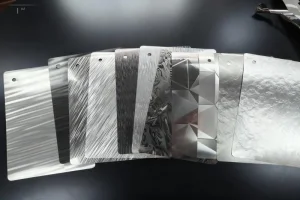
By applying excimer laser curing or specialized nano-coating onto transparent PETG base films, manufacturers create anti-fingerprint, velvety "skin-feel" surfaces. Light is diffusely reflected, creating an ultra-matte aesthetic that resists oil stains, scratches, and everyday abrasion in high-traffic kitchen cabinets and wardrobes.
C. High-Gloss Deep Visual 3D Metallic & Marble Panel Decals
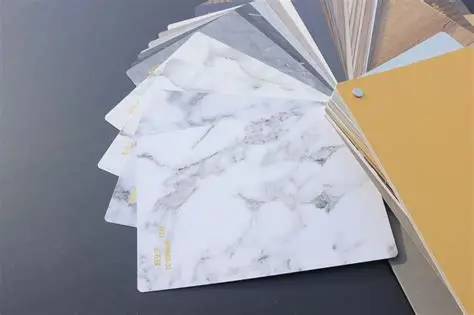
When high-transparency clear PET film is laminated over gravure-printed stone, marble, or metallic sub-layers, it creates a vivid "depth effect" mimicking real glass or polished natural marble at a fraction of the weight and structural cost, eliminating brittleness and transportation breakage risks.
5. Global Industry Trends & Future Innovations
The transparent decorative film industry is moving toward smart, ultra-durable, and sustainable material science. B2B purchasers should keep track of the following emerging trends:
- Bio-Based & Recycled Polyethylene (rPETG): Transitioning toward post-consumer recycled resins without sacrificing optical clarity or tensile strength.
- Nano-Ceramic Self-Healing Coatings: Surface layers engineered with thermosoftening top-coats capable of healing minor micro-scratches when exposed to moderate ambient heat.
- Anti-Bacterial & Hydrophobic Functional Layers: Embedding silver-ion antimicrobial agents into transparent caps for hygienic commercial applications in healthcare and hospitality sectors.