
For global buyers, selecting a reliable Polyester Shrink Film supplier involves more than comparing quoted prices. Film clarity, shrink ratio, tensile strength, gauge tolerance, and sealing performance can affect every packaged unit. A roll that looks acceptable in a sample room may wrinkle around sharp corners or split during long-distance handling. Small details matter. This guide introduces ten suppliers serving international markets and explains where each may fit. The selection focuses on manufacturing experience, product consistency, technical support, export capability, and documented quality practices. It also considers practical concerns, including minimum order quantities, production lead times, packaging protection, and responsiveness after delivery.
Reliable evidence matters. Supplier websites provide useful starting points, but independent test reports, specification sheets, audit records, and buyer feedback offer stronger context. Buyers should confirm whether stated shrink temperatures match their equipment and whether film grades suit food, industrial, or retail packaging requirements. Regional availability can also change freight costs, customs planning, and replenishment speed. These suppliers are not interchangeable. Some may excel at custom widths, while others offer steadier volume production or faster sampling. No ranking can remove every uncertainty. Product performance depends on storage, machinery settings, and operator practice. For that reason, this overview is a practical screening tool, not a substitute for trial orders and technical verification. Careful comparison can reduce surprises and support a more dependable global sourcing decision.
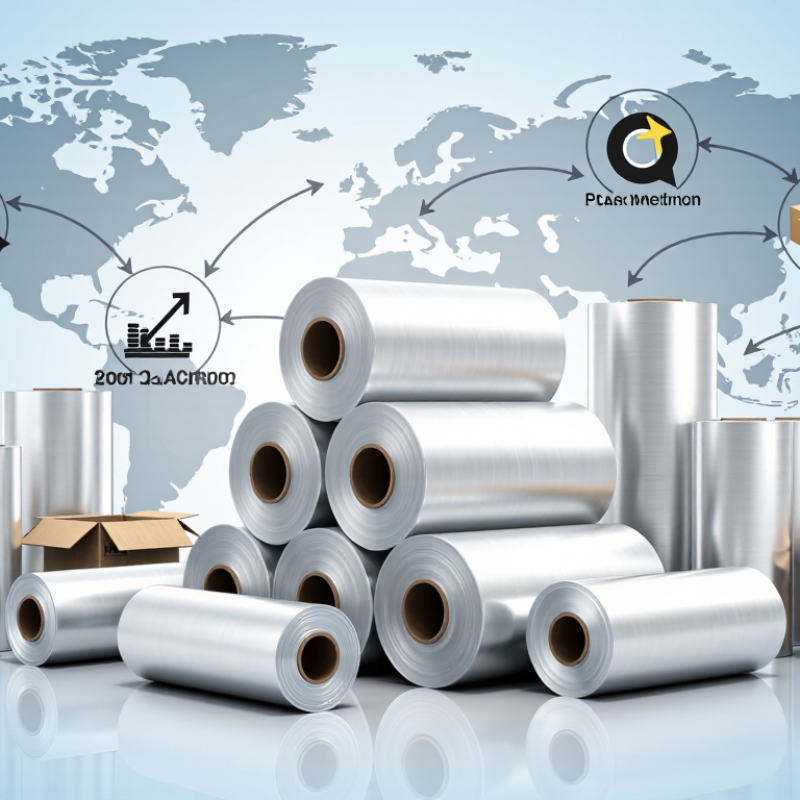
Polyester shrink film is a heat-responsive material usually made from oriented PET. During manufacturing, the film is stretched, cooled, and given controlled shrink properties. When heated, it contracts around a product, label, cable bundle, or protective component. Its clear appearance, tensile strength, and resistance to moisture and many chemicals make it useful across packaging and industrial applications.
Global buyers choose it for demanding supply chains. A well-specified film can protect surfaces during transport, improve label presentation, and reduce package movement inside cartons. PET also performs reliably in warehouses with changing temperatures. For electrical and industrial uses, its dimensional stability can matter more than appearance. Thin gauges may reduce material use, but they can tear during high-speed handling. Thicker film is not automatically better.
Specification work needs care. Buyers should compare shrink ratio, shrink force, thickness tolerance, width, core size, and sealing performance. Requesting samples is essential. A film that runs smoothly on one machine may wrinkle on another. Printing ink, tunnel temperature, and conveyor speed can change the result. The first trial may still fail. That is useful evidence, not wasted effort. Suppliers should provide test data, batch consistency records, packaging details, and practical guidance for storage. Local recycling systems also deserve review, because polyester recovery options differ between markets. A low price means little if the film arrives curled, absorbs moisture, or cannot meet the buyer’s equipment settings.
How to Evaluate Polyester Shrink Film Suppliers
Choosing among the 10 best polyester shrink film suppliers requires more than comparing prices. I start with the film specification sheet. Check thickness tolerance, shrinkage range, tensile strength, haze, and surface treatment. Ask whether test results come from recent production batches. A clean sample can hide inconsistent manufacturing. Request several rolls from different lots.
Supplier experience becomes visible during technical discussions. Reliable teams explain sealing temperature, shrink tunnel settings, storage limits, and common handling problems. They should also provide traceable quality records, safety documentation, and clear inspection procedures. Confirm production capacity before placing a large order. A supplier may offer excellent samples but struggle with monthly volume. Visit the facility when possible, or request a live video inspection. Look for organized warehouses, labeled materials, calibrated testing equipment, and moisture-controlled storage. These details are practical evidence of operational discipline.
Tips: Compare samples under your actual packaging conditions. Record shrinkage, clarity, seal strength, and roll behavior. Test after storage, not only on delivery day. Ask for references from buyers with similar volumes and destinations. Review lead times, packaging protection, payment terms, and claims handling in writing. I once focused too heavily on unit cost and overlooked damaged roll edges. That mistake created extra waste. A second review by production staff can expose risks that purchasing teams miss. Good evaluation is not perfect. It improves through measured trials, honest questions, and documented results.
This suggested evaluation model prioritizes product quality, film performance, reliable supply, and export readiness. Buyers can use the percentage weights to compare potential suppliers before requesting samples, audits, and quotations.
When comparing polyester shrink film suppliers, global buyers should examine more than quoted price. Plastics Europe reported 413.8 million tonnes of global plastics production in 2023. This scale increases pressure for measurable efficiency and responsible sourcing. Ask manufacturers for resin origin, film thickness tolerance, shrinkage curves, and production capacity. A reliable supplier should provide recent test records, not attractive promises.
Independent verification matters. Check ISO 9001 quality systems, food-contact compliance where relevant, and batch-level certificates. Request samples from different production dates. Measure shrink force, clarity, seal strength, and performance on your own packaging line. Smithers’ packaging research repeatedly identifies lightweighting and recyclability as major market priorities. However, thinner film is not automatically better. Poor control can create wrinkles, breakage, and higher waste. That part is often underestimated.
Tips: Compare total delivered cost, not factory price. Include freight, customs handling, rejected rolls, and lead time. Confirm whether the supplier can maintain specifications across export orders. Review audit reports, laboratory methods, and corrective-action records. A useful scorecard can assign points to quality, documentation, capacity, sustainability data, and service response. Do not rely on one successful sample. It may hide inconsistent production. I would also test performance during humid and cold conditions, because laboratory results can look cleaner than real warehouse conditions. Supplier selection becomes more reliable when evidence is repeated, traceable, and independently checked.
Top Polyester Shrink Film Suppliers for Global Buyers
Choosing reliable polyester shrink film suppliers requires more than comparing prices. Global buyers should examine film thickness, shrink ratio, tensile strength, clarity, and sealing performance. A supplier with clear technical data earns more trust. Ask for recent test reports, production samples, and batch consistency records before placing a large order.
Practical experience shows that packaging performance can change with temperature, machinery, and product shape. A film that works well on bottles may perform poorly around sharp cartons. Check the supplier’s experience with your packaging equipment. Confirm roll width, core size, packing method, minimum order quantity, and delivery schedule. Communication matters too. Delayed technical replies often create larger problems later.
Tips: Request a small trial shipment first. Test it under real production conditions. Measure shrinkage, seal strength, appearance, and waste. Keep written records for comparison. Also, review export documents and quality controls carefully. Some suppliers provide impressive samples but inconsistent bulk material. That is a real risk. I would not ignore it. A dependable supplier should explain storage conditions, recommended processing temperatures, and corrective actions when results fall outside specifications. A short factory video helps, but it cannot replace independent inspection or physical testing.
Anonymized global supplier comparison based on commonly requested polyester shrink film specifications and buyer evaluation criteria
| Rank | Supplier Profile | Primary Supply Region | Main Film Applications | Common Thickness Range | Typical Performance Features | Export Readiness | Buyer Score | Recommended Buyer Type |
|---|---|---|---|---|---|---|---|---|
| 1 | Supplier Profile A | East Asia | Electrical insulation, industrial wrapping, specialty packaging | 12–50 microns | High tensile strength, stable dimensional performance, good heat resistance | Strong | 9.4/10 | Large manufacturers requiring consistent technical-grade film |
| 2 | Supplier Profile B | South Asia | Label packaging, shrink sleeves, promotional packaging | 30–50 microns | Good clarity, reliable shrink response, suitable for high-speed printing | Strong | 9.2/10 | Label converters and consumer-product packaging companies |
| 3 | Supplier Profile C | Western Europe | Pharmaceutical, food, beverage, and tamper-evident packaging | 20–45 microns | High transparency, precise thickness control, strong compliance documentation | Very strong | 9.1/10 | Regulated industries and buyers needing traceable documentation |
| 4 | Supplier Profile D | North America | Industrial packaging, pallet stabilization, printed shrink applications | 25–75 microns | High puncture resistance, dependable sealing, broad converting compatibility | Very strong | 9.0/10 | Industrial distributors and high-volume contract packers |
| 5 | Supplier Profile E | Southeast Asia | Consumer goods, household products, bundled retail packaging | 15–50 microns | Balanced shrink performance, good surface appearance, competitive production capacity | Strong | 8.8/10 | Retail-packaging buyers seeking scalable production |
| 6 | Supplier Profile F | Middle East | Construction materials, industrial components, export packaging | 30–100 microns | Heavy-duty options, good weathering resistance, suitable for long-distance shipment | Strong | 8.6/10 | Industrial exporters and heavy-product manufacturers |
| 7 | Supplier Profile G | Latin America | Food and beverage multipacks, agricultural products, retail bundles | 20–60 microns | Good optical clarity, reliable sealing, flexible order-volume options | Moderate to strong | 8.5/10 | Regional buyers prioritizing shorter delivery routes |
| 8 | Supplier Profile H | Eastern Europe | Printed sleeves, cosmetics, personal-care packaging | 25–50 microns | Good print receptivity, smooth surface, consistent roll winding | Strong | 8.4/10 | Brand owners and converters using rotogravure or flexographic printing |
| 9 | Supplier Profile I | Africa | General merchandise, agricultural exports, protective outer packaging | 30–80 microns | Practical general-purpose grades, dependable mechanical strength, flexible packaging formats | Moderate | 8.1/10 | Importers and distributors serving developing markets |
| 10 | Supplier Profile J | Oceania | Food distribution, logistics protection, retail multipacks | 15–50 microns | Good handling performance, clear appearance, compatibility with standard shrink equipment | Moderate to strong | 8.0/10 | Distributors and mid-sized packaging operations |
Selecting a polyester shrink film supplier requires more than comparing quoted prices. Plastics Europe reported 413.8 million tonnes of global plastics production in 2023, highlighting the scale and complexity of material sourcing. Buyers should request resin specifications, film thickness tolerance, shrinkage data, tensile strength, haze, and sealing performance. These figures must match the packaging line, not merely the supplier’s brochure.
Ask for production samples before signing a long-term contract. Test them on your actual tunnel, conveyor speed, and product shape. A reliable supplier should provide batch-level certificates, traceability records, and clear quality limits. ISO 9001 certification can support process control, but it does not replace independent testing. Check monthly capacity, minimum order quantities, lead times, and backup production plans. Small delays can stop a full packaging line.
Look beyond the lowest price. The Smithers flexible packaging market outlook identifies continued growth in demand for lightweight and high-performance films, which may tighten capacity during disruptions. Compare delivered cost, not only film cost. Include freight, customs handling, storage, waste, and rejected rolls. Ask how the supplier manages thickness variation and edge damage. Visit the facility when possible. Photos are not enough.
One concern deserves honest attention. Polyester film can perform well, yet unsuitable shrink behavior may distort labels or damage delicate packs. My practical preference is a controlled trial with three production lots, although this adds time. That inconvenience is cheaper than discovering a serious mismatch after shipment.
Check thickness tolerance, shrinkage range, tensile strength, haze, and sealing performance. Ask for recent test results. Old data can mislead.
One clean roll may hide inconsistent manufacturing. Request several rolls from separate lots. Compare clarity, shrinkage, seal strength, and roll edges.
Use the film on your actual packaging line. Match your tunnel temperature, conveyor speed, and product shape. Record waste and label distortion.
Ask about monthly capacity, minimum order quantity, lead time, and backup plans. Confirm roll width and core size. Small delays can stop production.
Look for labeled materials, organized warehouses, calibrated equipment, and controlled storage areas. A live video helps. Physical inspection remains stronger.
No. Certification may support process control, but it cannot replace independent testing. Test the material under real operating conditions.
Compare delivered cost, not only the film price. Include freight, customs handling, storage, waste, and rejected rolls. Cheap film can become expensive.
A controlled trial using three production lots is practical. It takes extra time. That is inconvenient, but safer than discovering problems after shipment.
Ask about sealing temperatures, shrink tunnel settings, storage limits, and corrective actions. Slow technical replies may signal future problems. I might be too cautious, but written answers matter.
This guide explains what Polyester Shrink Film is and why it is widely used by global buyers for secure, attractive, and efficient packaging. Known for its strength, clarity, dimensional stability, and reliable shrink performance, it can help protect products from dust, moisture, and handling damage while improving shelf presentation. The article also outlines the main factors buyers should consider when evaluating international suppliers, including film quality, thickness options, shrink ratios, production capacity, customization services, testing procedures, packaging standards, lead times, and communication.
It then presents a practical framework for comparing Polyester Shrink Film manufacturers without relying solely on price. Buyers are encouraged to review technical documentation, quality-control systems, sample performance, order flexibility, export experience, and after-sales support. By matching these criteria with their product requirements, machinery, target markets, and budget, packaging buyers can select a dependable supplier capable of delivering consistent materials and supporting long-term international purchasing needs.
