
China Top Poly Film Tint Manufacturers for Global Buyers

Time:2026-10-11 Author:Mason
0%

China has become a major sourcing base for Poly Film Tint, serving automotive, architectural, and specialty glass markets worldwide. Its manufacturers offer broad product ranges, including dyed, metallized, ceramic, and multilayer films. However, product labels alone do not prove consistent performance. Buyers need evidence.

Darrell Amberson, a longtime automotive window-film educator and former president of the Automotive Window Film Association, has stated, “The quality of the installation is just as important as the quality of the film.” This practical observation remains highly relevant. A strong factory may still deliver disappointing results without careful packaging, technical guidance, and trained installation partners.

This guide examines China’s leading Poly Film Tint manufacturers through measurable buyer concerns. These include visible light transmission, infrared rejection, ultraviolet protection, adhesive stability, color consistency, and warranty coverage. It also considers factory experience, export capability, testing procedures, and communication speed. Look closely. A polished catalog can hide uneven roll quality or unclear technical data.

Global buyers should request samples before placing large orders. Compare films beside natural sunlight, vehicle glass, and common building windows. Check whether the shade remains uniform after installation. Ask for laboratory reports, batch records, safety documentation, and realistic warranty terms. Some suppliers may provide impressive figures without explaining testing conditions. That weakness deserves attention.

No supplier ranking is perfect. Product quality may vary between series, production batches, or application climates. A film designed for tropical heat may not suit colder regions or different glass types. Careful verification reduces costly surprises. This overview aims to support informed decisions, not replace independent testing or professional installation advice.
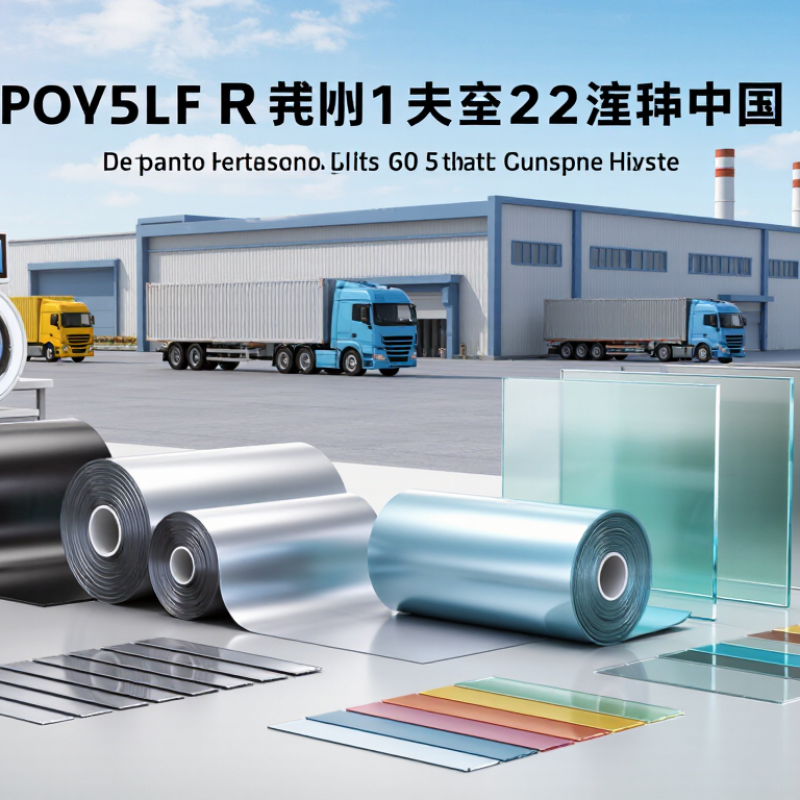
China Top Poly Film Tint Manufacturers for Global Buyers

Poly Film Tint Explained: PET Layers, 50–200 μm Thickness, and 5–99% VLT

China Top Poly Film Tint Manufacturers for Global Buyers

Poly film tint is usually built around a PET layer, not a single colored sheet. The polyester base provides dimensional stability and supports the tinting system. Other layers may include adhesive, protective hard coat, and release liner. Total film thickness commonly ranges from 50 to 200 μm, depending on construction and application. Thicker films can feel more durable during handling, but thickness alone does not prove better optical performance.

Visible Light Transmission, or VLT, describes how much visible light passes through the installed film. A 5% VLT film appears very dark, while 99% VLT remains nearly clear. Buyers should request measured VLT data, not only a catalog estimate. Testing should consider the film, glass, adhesive, and viewing angle together. Small differences become obvious beside a bright window.

Sample checking matters. Ask for roll width, thickness tolerance, haze, adhesive type, and aging data. A spectrophotometer can verify transmission more reliably than visual comparison. In practice, two films with the same stated VLT may look different on green or laminated glass. This is easy to overlook. No sample is perfect, and printed specifications can simplify real installation conditions. Repeated testing under sunlight and indoor lighting gives a more honest basis for global purchasing decisions.

China Manufacturer Comparison: ≥99% UV Rejection, 40–70% TSER, and Film Types

China’s poly film manufacturers increasingly compete on measurable solar-control performance, not only price.

The International Window Film Association notes that quality films can block about 99% of ultraviolet radiation, protecting interiors from fading and supporting occupant comfort. However, UV rejection is not the same as heat rejection. A supplier may advertise 99% UV blocking while delivering only 45% total solar energy rejected.

For global buyers, TSER should be compared under consistent NFRC or ISO test conditions. A practical Chinese manufacturer comparison often places dyed films near the lower end, around 40–50% TSER. Hybrid and metalized constructions may reach 50–65%. Advanced ceramic structures can approach 60–70%, depending on glass type, film thickness, and visible light transmission. The U.S. Department of Energy’s window-performance guidance also emphasizes that solar heat gain depends on the complete glazing system, not film claims alone.

Ask for laboratory data, not showroom promises. Check UV rejection, TSER, visible light transmission, reflectance, haze, and warranty terms together. On a sunny test pane, darker film may feel cooler, but it can reduce cabin brightness more than expected. That trade-off matters. Some test results look impressive yet fail to represent installed conditions. This is where buyers should pause, request sample rolls, and compare independent measurements before approving a large production order.

Buyer Quality Checks: ISO 9001, ASTM Tests, and 380–400 nm UV Blocking

For global buyers, a poly film tint should prove its performance, not merely display attractive samples. ISO 9001 certification shows that documented quality controls exist, but buyers must verify the certificate scope, site address, and renewal status. A certificate alone is not proof. Factory audits should compare batch records, coating thickness, color variation, and complaint handling.

The 380–400 nm range deserves careful attention. It sits near the boundary between ultraviolet and visible violet light, so “UV blocking” claims can be misleading without a spectral curve. Request test data showing transmission at 380, 390, and 400 nm. ASTM E903 can support solar spectral measurements, while ASTM D1003 helps evaluate visible haze. ASTM D1044 is useful when abrasion resistance matters. The WHO reports roughly 2–3 million non-melanoma skin cancer cases annually, reinforcing the value of measurable UV protection, although window film is not a medical safeguard.

During sourcing, ask for independent laboratory reports, test conditions, sample thickness, and instrument calibration dates. Compare the production sample with the tested sample. That detail is often missed. A darker film may reduce glare, yet it does not automatically block more UV. I would also check adhesive clarity after heat and humidity exposure. No test program is perfect; real installations can reveal edge lifting, dust, or color drift that laboratory sheets fail to show.

China Top Poly Film Tint Manufacturers for Global Buyers - Buyer Quality Checks: ISO 9001, ASTM Tests, and 380–400 nm UV Blocking
Quality Dimension Buyer Quality Check Relevant Standard or Test Method Recommended Evidence from the Supplier Practical Acceptance Guidance
Quality Management System Confirm whether the manufacturing site operates under a certified quality management system and whether the certificate scope covers film production or coating. ISO 9001:2015 Valid certificate showing the legal entity, manufacturing site, certification scope, issue date, expiry date, and certification body. Verify the certificate directly through the issuing certification body when possible. ISO 9001 confirms a management system; it does not by itself guarantee a specific film performance level.
Film Construction Review total thickness, polyester base thickness, adhesive layer, hard-coat layer, liner, and tolerance. Supplier technical data sheet; thickness measurement by calibrated micrometer or thickness gauge. Batch-specific certificate of analysis, layer construction diagram, measurement method, and declared tolerance. Compare the measured total thickness with the purchase specification. Require the supplier to state whether the declared thickness includes the release liner.
Visible Light Transmission Measure the percentage of visible light passing through the film and confirm consistency between samples and production lots. ASTM D1003 for luminous transmittance and haze; ISO 9050 or EN 410 may also be used for glazing-related optical calculations. Independent laboratory report or calibrated spectrophotometer report identifying the illuminant, observer, substrate, and test configuration. Set the required visible light transmission according to the intended application and local vehicle or building regulations. Do not compare values measured on different glass substrates without adjustment.
Haze and Optical Clarity Check for cloudiness, milkiness, distortion, streaks, pinholes, coating marks, and uneven appearance after lamination or installation. ASTM D1003 for haze and luminous transmittance; visual inspection under controlled lighting. Test report with haze value, sample preparation details, and photographs of the inspected surface. Use a defined maximum haze requirement in the purchase specification. A lower haze value generally indicates clearer optical appearance, but the required limit depends on the application.
380–400 nm UV Blocking Measure spectral transmittance at 380, 390, and 400 nm, then calculate the blocked percentage at each wavelength. UV-Vis spectrophotometry; report the instrument range, wavelength interval, substrate, and calculation method. ISO 9050 can support glazing-related solar and light-transmission reporting. Wavelength-by-wavelength spectral curve or data table, instrument calibration record, test date, sample identification, and substrate information. Use the formula: UV blocking (%) = 100 − spectral transmittance (%). A claim covering 380–400 nm should be supported by data across the complete range, not only by a single 400 nm reading.
UV Protection Claim Distinguish between UVA blocking, UVB blocking, and general ultraviolet rejection claims. UV-Vis spectral transmission testing across the declared wavelength range. Detailed spectral report showing the measured range and the exact definition of the advertised UV-blocking percentage. Do not accept “99% UV rejection” as sufficient evidence unless the supplier states the wavelength range, test setup, substrate, and calculation basis.
Solar Heat and Infrared Performance Confirm whether the product claim concerns solar energy rejection, infrared rejection, or only ultraviolet blocking. ISO 9050, EN 410, or another clearly identified spectrophotometric and calorimetric method suitable for the application. Full spectral data, solar energy transmittance, reflectance, absorptance, and test configuration. UV blocking and infrared rejection are different performance characteristics. They should be specified and tested separately.
Color and Appearance Check color consistency, neutral appearance, reflectivity, and change in color after exposure to heat, moisture, and light. ASTM E308 for calculating color values from spectral data; visual comparison under controlled lighting. Color coordinates, illuminant and observer details, reference sample, batch tolerance, and accelerated-aging comparison images. Define acceptable color tolerance using the selected color system and measurement conditions. A visual sample alone is not a complete color-control specification.
Abrasion Resistance Evaluate surface scratching and haze increase after repeated rubbing or cleaning. ASTM D1044 for abrasion resistance of transparent plastics, where applicable to the product construction. Test method, wheel or abrasive specification, load, number of cycles, initial haze, final haze, and haze increase. Use the same substrate, coating orientation, load, and cycle count for supplier comparisons. The test configuration should match the intended installation and cleaning conditions.
Adhesion and Installation Check adhesion to the specified glass or plastic substrate, edge lifting, bubbles, shrinkage, and installation behavior. Supplier-defined peel or adhesion method; ASTM D3330 may be considered for pressure-sensitive adhesive peel testing when applicable. Adhesive technical data sheet, peel-test conditions, installation instructions, recommended water solution, curing time, and substrate limitations. Test the exact adhesive and film combination on the intended substrate. Adhesion results can vary with glass coating, surface contamination, temperature, and curing time.
Dimensional Stability Measure film shrinkage or curl after controlled heat exposure and after installation. Supplier-defined heat-aging or dimensional-stability procedure with documented temperature, time, and measurement direction. Before-and-after dimensions, test temperature, exposure duration, specimen direction, and acceptance limit. Specify machine-direction and transverse-direction shrinkage separately when relevant. Excessive shrinkage can increase edge stress and installation defects.
Weathering and Durability Assess changes in color, haze, adhesion, cracking, delamination, and UV-blocking performance after accelerated aging. ASTM G154 for fluorescent UV exposure or ASTM G155 for xenon-arc exposure, when the selected cycle is appropriate to the application. Exposure cycle, irradiance, temperature, condensation or spray conditions, duration, pre-test values, and post-test values. Accelerated-weathering results are comparative indicators and are not a direct guarantee of a specific outdoor service life.
Batch Traceability Confirm that each roll can be traced to raw materials, coating line, production date, inspection results, and packaging records. Supplier quality-management procedure aligned with ISO 9001 principles. Lot number, roll number, production date, inspection record, raw-material lot references, and retained sample policy. Require the lot number on the commercial invoice, packing list, labels, certificate of analysis, and test samples.
Packaging and Shipping Inspect roll protection, core deformation, moisture protection, label accuracy, and loading condition. Purchase specification and agreed export-packaging procedure. Packaging drawing, roll dimensions, gross and net weight, pallet details, moisture protection, and shipping photographs. Specify acceptable roll telescoping, core damage, edge damage, and storage temperature before shipment.
Regulatory and Market Fit Confirm that visible light transmission, reflectivity, safety glazing compatibility, labeling, and installation requirements meet the destination market. Applicable national or regional vehicle, building, glazing, and chemical requirements; use the destination jurisdiction’s current rules. Declaration of conformity where applicable, safety data sheet, restricted-substance statement, labeling artwork, and market-specific test reports. Regulatory compliance is market-specific. Obtain written confirmation from the importer or local compliance adviser before commercial release.
Pre-Shipment Inspection Conduct random sampling by roll and verify appearance, dimensions, visible light transmission, haze, color, and UV spectral data. Agreed inspection plan; sampling level and acceptance criteria defined in the purchase contract. Inspection report, sample photographs, measurement records, nonconformity report, and corrective-action record when required. Approve a signed golden sample and written specification before mass production. Use independent testing for critical optical or UV claims.
Buyer note: ISO 9001 verifies a quality-management system, while ASTM and ISO/EN methods define specific measurement approaches. Final acceptance limits should be agreed in writing for the exact film construction, substrate, application, and destination market.

Supplier Due Diligence: MOQ, Lead Time, Warranty, and ±5% Batch Tolerance

China’s leading poly film tint manufacturers often quote attractive prices, but supplier checks should begin beyond the catalog. Ask for a written MOQ by film width, shade, and packaging format. A low MOQ may still require costly setup charges. Confirm whether samples count toward the first production order.

Lead time needs two separate figures: production time and shipping time. Request a schedule showing artwork approval, coating, curing, inspection, and dispatch. A supplier promising ten days without process details deserves careful questioning. Delays happen. Your contract should explain how revised delivery dates affect payment and installation planning.

Warranty language must be specific, not decorative. Check coverage for peeling, bubbles, uneven tint, adhesive failure, and abnormal color change. Confirm the warranty period, claim evidence, storage conditions, and remedy options. The phrase “±5% batch tolerance” also needs definition. Does it refer to tint density, visible-light transmission, width, or roll length? These measurements are not interchangeable. Request a retained sample, inspection report, and test method for every batch. In practical sourcing, this small step can expose shade drift between two rolls. It is easy to overlook. I would also test one roll after transport and another after installation, because factory results may not reflect site conditions.

Global Import Guide: Automotive and Architectural Codes, Installation, and Care

China Top Poly Film Tint Manufacturers for Global Buyers

For global buyers, automotive and architectural tint codes must be checked before ordering poly film. Automotive rules often specify visible light transmittance, not simply “light” or “dark.” UNECE Regulation No. 43 commonly requires at least 70% transmittance for windscreen areas. However, national rules can differ. Confirm the destination country, vehicle position, and certification documents. Architectural projects usually require visible transmittance, solar factor, and shading coefficient data. ISO 9050 and NFRC procedures help standardize these measurements.

Energy performance also matters. The U.S. Department of Energy reports that windows can cause 25–30% of residential heating and cooling energy use. The IEA’s The Future of Cooling report projects global cooling demand could more than triple by 2050. Properly selected film may reduce glare and solar heat, but results depend on glass type, climate, orientation, and installation quality. Importers should request test reports, batch numbers, adhesive specifications, and installation instructions. HS classification may vary, so customs verification remains necessary.

Tips: Ask for a small sample first. Measure actual visible transmittance. Check film compatibility with laminated or coated glass. During installation, keep dust away and use a soft squeegee. Many films need several weeks to cure. Avoid ammonia cleaners. A common mistake is judging quality immediately after application; haze can disappear slowly, though not always. That uncertainty deserves careful inspection.

FAQS

What is poly film tint made from?

It usually uses a PET polyester layer as its stable base. Other layers may include adhesive, hard coat, and release liner. It is not simply colored plastic.

How thick is poly film tint?

Common thickness ranges from 50 to 200 μm. Thicker film may handle better during installation. Thickness alone does not prove better optical performance.

What does VLT mean?

VLT means visible light transmission. A 5% VLT film looks very dark. A 99% VLT film appears nearly clear.

Should buyers trust catalog VLT figures?

Ask for measured VLT data instead. Testing should include the film, glass, adhesive, and viewing angle. Small differences show clearly beside a bright window.

Why are samples important before a large order?

Samples reveal roll width, thickness tolerance, haze, and adhesive behavior. Check the sample under sunlight and indoor lighting. No sample is perfect.

Does 99% UV rejection mean strong heat rejection?

No. UV rejection and heat rejection measure different results. A film can block 99% of ultraviolet radiation while rejecting only 45% of solar energy.

What TSER range can buyers expect?

Dyed films often provide about 40–50% TSER. Hybrid and metalized films may reach 50–65%. Advanced ceramic structures can approach 60–70%, depending on installation conditions.

How can buyers compare supplier test results fairly?

Request UV rejection, TSER, VLT, reflectance, haze, and warranty data. Use consistent laboratory standards and test conditions. I would not approve a large order from showroom claims alone.

Conclusion

Poly Film Tint is a multilayer PET-based material designed to improve solar control, privacy, comfort, and interior protection in automotive and architectural applications. Typical products range from 50–200 μm in thickness, with visible light transmittance (VLT) options from 5% to 99%. When comparing manufacturers, buyers should review UV rejection of at least 99%, total solar energy rejection (TSER) commonly between 40% and 70%, and available film types such as dyed, metallized, carbon, or ceramic constructions.

Quality assessment should include ISO 9001 certification, relevant ASTM testing, and documented blocking performance across the 380–400 nm UV range. Supplier due diligence should confirm MOQ, production lead time, warranty coverage, and batch consistency within approximately ±5%. Before importing, buyers should verify automotive or architectural code requirements, installation procedures, surface preparation, and long-term care instructions. Clear technical documentation and sample testing can reduce purchasing risks and support consistent global project results.

Mason

Mason

Mason is a seasoned marketing professional with a deep expertise in the company's offerings and a passion for driving brand awareness. With a strong background in digital marketing strategies, he has an innate ability to connect with diverse audiences and effectively communicate product benefits.......