
How to Choose Tinted Plastic Film for Global Sourcing?

Time:2026-10-21 Author:Amelia
0%

Choosing Tinted Plastic Film for global sourcing requires more than comparing colors and unit prices. The right film must perform reliably across production, shipping, storage, and final use. A warm gray sample may appear consistent in a showroom, yet shift under warehouse lighting or after exposure to heat. Small details matter.

This guide focuses on practical decisions that purchasing teams and packaging engineers face every day. It examines resin type, tint concentration, thickness tolerance, transparency, haze, surface finish, roll width, and winding quality. It also considers whether the film suits printing, lamination, thermoforming, or protective applications. Not every quote is comparable. A lower price may reflect thinner material, wider tolerances, weaker packaging, or incomplete testing.

Reliable sourcing depends on evidence. Request technical data sheets, batch samples, inspection records, and clear statements about additives and recycled content. Confirm how the supplier controls color variation between lots. Ask for test results that match the intended environment, including temperature, light exposure, and contact with other materials. Independent testing may be sensible when performance is critical. Regional standards and import requirements can also differ, so local professional advice remains valuable.

There is no universal “best” Tinted Plastic Film. A film that works well for retail sleeves may fail in a laminated industrial panel. Early sourcing decisions can also rely on incomplete assumptions. Recognizing that risk improves the process. Careful sampling, documented specifications, supplier audits, and realistic trial orders create a stronger basis for global purchasing decisions.
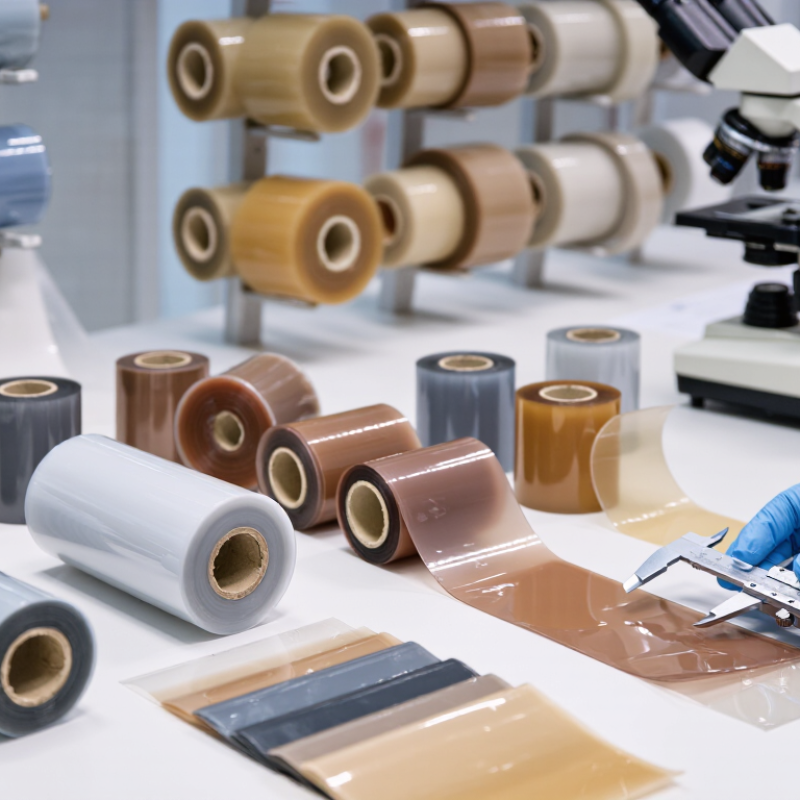
How to Choose Tinted Plastic Film for Global Sourcing?

Define the Performance Requirements for Tinted Plastic Film

Choosing tinted plastic film starts with measurable performance requirements, not color preference. Specify the intended use, viewing angle, installation surface, and expected service life. A dark gray film may reduce glare, yet it can lower visible light transmission too much. Record target values for transmission, haze, color difference, and thickness tolerance. Use numbers, not “high quality.”

Environmental exposure changes the decision. Define operating temperatures, humidity, sunlight intensity, and contact with cleaners or plasticizers. For outdoor applications, request UV-aging data, tensile strength, elongation, shrinkage, and yellowing results. For laminated structures, check adhesive compatibility and dimensional stability after heat cycling. A film that performs in a warehouse may fail beside a hot window. Samples can hide variation. Ask for production-lot data, not only a polished sample.

Build a small validation plan before global sourcing. Test several rolls from different lots under the actual light source and substrate. Measure color after aging, inspect edge curling, and compare the film after repeated cleaning. Test under real conditions. Confirm documentation for destination-market chemical, recycling, and labeling requirements. Independent laboratory testing adds confidence when technical claims seem vague. Some requirements will remain uncertain, especially when long-term exposure data is limited. That uncertainty should appear in the purchasing decision, rather than being quietly ignored.

Compare Film Materials, Tint Options, and Light-Control Properties

How to Choose Tinted Plastic Film for Global Sourcing?

Selecting tinted plastic film starts with the base material. PET film offers strong dimensional stability and clear optical performance. PVC film is flexible and often more economical. Polycarbonate film resists impact better, but it may cost more.

For outdoor use, check ultraviolet stability, surface durability, and temperature resistance. A film that performs well indoors may fade quickly in direct sunlight.

Tint options affect more than appearance. Gray tint usually reduces glare while preserving a neutral view. Bronze tint can create a warmer visual effect. Blue or green tones may change how products and interior colors appear.

Light-control properties should be measured, not guessed.

Compare visible light transmission, ultraviolet blocking, and solar heat reduction.

Darker film is not always better. It can reduce visibility and increase indoor lighting needs. Small details matter.

Tips: Request samples from each supplier and inspect them beside real glass. Measure color, haze, adhesion, and transmission with documented test methods. Ask for production tolerances, coating thickness, and batch consistency. Confirm packaging for long-distance shipping. I would also test one sample after heat and humidity exposure. Laboratory data helps, but field conditions can be less polite. Some suppliers provide impressive numbers. Those numbers still need independent checking.

Evaluate Suppliers, Certifications, and Global Sourcing Risks

How to Choose Tinted Plastic Film for Global Sourcing?

Supplier evaluation should begin with the film, not the catalogue. Request resin specifications, tint concentration, thickness tolerance, haze, light transmission, and aging data.

A reliable supplier should provide batch-level certificates of analysis and retain production samples. Ask for the test method, laboratory name, and report date.

Small details expose weak control.

Certifications help, but they are not automatic proof of compliance. Check the certification scope, site address, expiry date, and issuing body.

ISO 9001 supports quality management, while ISO 14001 indicates an environmental management system.
Neither guarantees consistent color. For packaging applications, request relevant food-contact or migration testing.

Requirements vary by destination and end use.

OECD’s Global Plastics Outlook projects global plastic waste could nearly triple by 2060, reaching about 1.014 billion tonnes annually. This makes recycled content claims and traceability increasingly important.

Global sourcing risks include port disruption, currency changes, inconsistent pigments, and changing chemical rules.

UNEP’s Turning off the Tap report states that plastic pollution could be reduced by 80% by 2040 through existing solutions. Ask suppliers to disclose recycled content, additives, and restricted-substance controls.

Audit a production run when possible. Compare samples under daylight and controlled lighting.

Do not approve one attractive sample. Some films fade after heat exposure.

I have seen procurement decisions rely too heavily on certificates. That is a mistake worth admitting.

Use staged orders, inspection points, and a backup supplier before scaling.

Verify Quality Through Samples, Testing, and Production Audits

How to Choose Tinted Plastic Film for Global Sourcing?

A tinted film should pass more than a visual check. PlasticsEurope’s Plastics—The Fast Facts 2024 reports global plastic production reached 413.8 million tonnes in 2023. This scale increases supplier choices, but also increases quality variation. Request samples from the exact production line, not laboratory leftovers. Check thickness, tint uniformity, light transmission, haze, gloss, tensile strength, and adhesion. Measure color with a spectrophotometer and record Delta E values against an approved master sample. Human eyesight is useful, but insufficient.

Use recognized methods. ASTM D1003 supports haze and luminous transmittance testing, while ASTM D882 measures tensile properties. For outdoor applications, ISO 4892-3 can guide fluorescent UV exposure. Test the film at its actual thickness and intended lamination structure. A darker tint may reduce visible light, yet it can also increase heat absorption. Do not ignore this trade-off. A glossy sample can still fail after UV exposure, winding, or transport.

Production audits should inspect resin records, pigment dosing, extrusion temperature, line speed, corona treatment, and roll winding. Ask for batch traceability and retained samples. ISO 9001-based controls offer a useful audit framework, but a certificate alone proves little. Compare three production rolls, including the first and last rolls. Check shade drift across the roll width. One weak point remains common: suppliers may test only ideal samples. Require independent retesting before shipment, and document every deviation before approval.

Calculate Total Costs, Logistics, and Long-Term Supply Reliability

How to Choose Tinted Plastic Film for Global Sourcing?

A competitive unit price does not reveal the real landed cost.

Calculate film price, tinting fees, tooling, packaging, insurance, duties, inland transport, and financing. Add expected scrap from haze, uneven color, curl, or coating defects. A 2% defect rate can erase a small price advantage.

Price is only the opening number.

UNCTAD’s Review of Maritime Transport reports that over 80% of global merchandise trade by volume moves by sea.

Therefore, compare freight by route, container utilization, port congestion exposure, and customs risk.

The World Bank’s 2023 Logistics Performance Index evaluates reliability through customs, infrastructure, tracking, and timeliness across 139 economies.

Use those factors when selecting a production region. Ask suppliers for recent lead-time records, not optimistic quotations.

Delays compound.

For long-term supply, approve the film against measurable limits:

visible light transmission, haze, color tolerance, thickness, tensile strength, and UV aging performance.

Request three production lots, retain sealed samples, and review certificates of analysis.

An accelerated weathering test can expose fading before installation, though it cannot perfectly reproduce every climate.

Contract terms should define change notification, backup resin sources, minimum safety stock, and corrective-action timing.

A dual-source plan may reduce disruption, but it can increase qualification costs and create slight color differences. That trade-off deserves review.

Document it.

Reliable sourcing is built through repeated evidence, not one successful shipment.

FAQS

Which base material suits tinted plastic film?

PET offers stable dimensions and clear optics. PVC is flexible and often cheaper. Polycarbonate handles impacts better, but costs more.

How should tint color be selected?

Gray reduces glare with a neutral view. Bronze creates warmth. Blue and green tones can alter interior colors.

Is darker film always better?

No. Dark film can reduce visibility and increase indoor lighting needs. It may also absorb more heat. Test it carefully.

Which performance values should buyers compare?

Compare visible light transmission, ultraviolet blocking, solar heat reduction, haze, and adhesion. Measure them with documented methods.

How can samples reveal quality problems?

View samples beside real glass. Check color, thickness, gloss, and transmission. Test samples after heat and humidity exposure. Field conditions are less polite.

What supplier documents should be requested?

Request resin details, tint concentration, thickness tolerance, aging data, and batch certificates. Check test methods, laboratory details, and report dates.

Do certifications guarantee consistent film quality?

No. Review scope, site address, expiry date, and issuing body. Certification supports control, but it cannot guarantee stable color.

How should production quality be verified?

Inspect resin records, pigment dosing, extrusion temperature, and roll winding. Compare three production rolls. Check shade changes across the width.

What testing methods are useful for tinted film?

Use recognized methods for haze, light transmission, tensile strength, and ultraviolet exposure. Test the actual thickness and lamination structure.

How can global sourcing risks be reduced?

Use staged orders, inspection points, batch traceability, and a backup supplier. Confirm packaging for long-distance shipping. Do not approve one attractive sample.

Conclusion

Choosing the right Tinted Plastic Film for global sourcing requires a structured evaluation of both technical performance and supply-chain reliability. Buyers should first define the film’s required color, transparency, durability, temperature resistance, flexibility, UV protection, and light-control performance. Comparing materials and tint options helps identify the best balance between appearance, functional properties, application needs, and expected service life.

Supplier evaluation should include manufacturing capabilities, relevant certifications, quality systems, communication standards, and potential sourcing risks. Before placing a large order, buyers should request samples, conduct performance and aging tests, and consider production audits to verify consistency. A complete cost analysis should cover material pricing, tooling, packaging, transportation, import-related expenses, inventory, and possible quality losses. Finally, assessing lead times, capacity, contingency plans, and long-term cooperation potential can help ensure a stable supply of Tinted Plastic Film and reduce unexpected disruptions in international procurement.

Amelia

Amelia

Amelia is a seasoned marketing professional with a wealth of expertise in our company’s core offerings. With an unwavering passion for driving growth and innovation, she plays a pivotal role in shaping our marketing strategies and enhancing brand visibility. A key aspect of her responsibilities......