
Choosing the right Pet Film For Display Cases in 2026 requires more than comparing price, thickness, and surface gloss. A display case may face fingerprints, ultraviolet light, cleaning chemicals, and repeated handling. The film must protect the product while keeping labels, collectibles, and graphics visually clear. Small optical defects become obvious under LED spotlights.
Industry data supports a careful approach. Smithers’ “The Future of PET Film to 2028” identifies electronics, packaging, and specialty applications as important demand areas for high-performance polyester films. Mordor Intelligence’s “Polyethylene Terephthalate Films Market” analysis also highlights transparency, dimensional stability, and barrier performance as key selection factors. These reports provide useful market direction, but they do not replace application testing. Real cases behave differently.
Start with measurable requirements. ASTM D1003 testing helps evaluate haze and light transmission. ASTM D882 provides a reference for tensile properties. For UV-sensitive items, compare ultraviolet-blocking data rather than trusting the phrase “UV resistant.” A 100-micron film may feel durable, yet it can still scratch without a hard coat. A thinner film may perform better when optical clarity and easy forming matter most. It depends.
Check the edges, too. Poor cutting can expose sharp corners or create lifting during installation. Ask suppliers for technical data sheets, coating details, test conditions, and sample rolls. Review yellowing, adhesive compatibility, cleaning resistance, and static behavior under actual lighting. I would not choose a film from a catalog photograph alone. Testing a small case for several weeks may reveal problems that laboratory data misses.
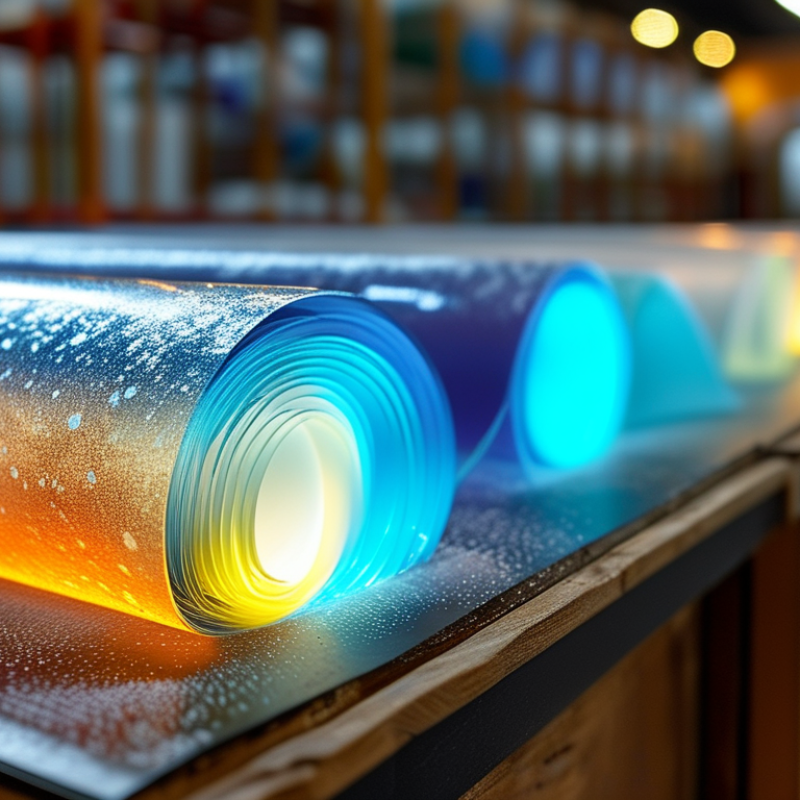
How to Choose PET Film for Display Cases in 2026?
Understanding PET Film Types for Display Case Applications
PET film is not one universal material. Its performance changes with thickness, surface finish, coating, and recycled content. For display cases, start with the viewing purpose. Clear PET film suits product windows and protective overlays. It keeps details visible while reducing handling marks. Choose matte or anti-glare film for showcases under strong ceiling lights. These surfaces reduce reflections, but may soften fine text and metallic colors.
Hard-coated PET film is useful where frequent cleaning or light abrasion is expected. Check the coating hardness and cleaning guidance before specifying it. A thin film may fit curved panels more easily. A thicker grade can feel more stable on flat sections. The wrong thickness can cause wrinkles, edge lift, or an uneven appearance. Small samples reveal these problems quickly.
Recycled-content PET can support material goals, but clarity may vary between production batches. Ask for technical data, optical measurements, thickness tolerance, and lot consistency. For printed displays, confirm ink adhesion and color stability after installation. PET film also responds to temperature and humidity changes. Leave practical allowance for mounting, especially inside warm cases. One lesson from sample reviews is easy to miss: the clearest film is not always the best choice. A slight haze may improve readability under focused lighting. Test the actual film beside the case, product, lights, and cleaning tools. That comparison is more reliable than a catalog image.
Film clarity should match the object, lighting, and viewing distance. High-transparency PET film reveals fine textures, pale colors, and small labels. However, strong clarity can expose reflections from overhead LEDs or nearby windows. A slightly diffused film may create a calmer presentation. It can also hide minor surface dust.
In display projects, I compare visible light transmission, haze, and surface reflection before selecting film. A clear sample may look excellent in a warehouse but produce glare inside a bright showroom. Test the film with the actual case lighting, not only under office lights. Check viewing angles too. Visitors rarely stand directly in front.
Tips: Place two film samples beside the display. Use the intended lamps, background, and distance. Watch for washed-out whites, dark corners, and distracting reflections. Ask an experienced fabricator to inspect edge visibility and installation tension. Small differences become obvious after several hours of viewing.
Light control also affects conservation and comfort. PET film with controlled UV filtering can help reduce unnecessary exposure, but it should not replace proper lighting management. For high-value objects, confirm performance data through technical documentation and independent testing when possible. I once assumed the clearest option would always win. It did not. The display looked sharp, yet glare weakened the visitor’s experience. Rechecking the balance between clarity and light control produced a more practical result.
Evaluating Thickness, Strength, and Forming Performance
Choosing PET film for a display case starts with thickness, but thickness alone can mislead. Thin film may reduce weight and improve transparency. However, it can flex around shelves and show handling marks. Thicker film usually offers better stiffness and impact resistance. It may also require more forming heat and stronger equipment. In practical trials, measure deflection under the actual shelf load, not only under laboratory conditions.
Strength should match the case structure. Check tensile strength, tear resistance, and resistance to repeated bending. A film that survives one pull test may still crack after daily cleaning. Pay attention to corners, drilled holes, and fixing points. These areas concentrate stress. Small-radius corners can expose weaknesses quickly. Clear film can also hide early damage, which makes inspection important.
Forming performance often decides whether production stays consistent. Heat the film gradually and record its forming temperature, stretching behavior, and cooling shrinkage. Excessive stretching can thin the corners and distort printed objects inside the case. Poor cooling control may leave warped panels. I once underestimated corner thinning during a trial; the flat samples looked excellent. That result was not enough. Test a full-size prototype, including joints, vents, and real lighting conditions. Allow extra tolerance, because factory results rarely match the first sample perfectly.
Choosing PET film for a display case in 2026 starts with the object inside.
UV protection matters for photographs, textiles, paper, and painted surfaces. Ask for measured UV transmission data, not only a marketing claim. A film that blocks ultraviolet light can slow fading, but it cannot stop all damage. Visible light, heat, and humidity still affect sensitive items. Request current test reports from the supplier and check the testing method.
Surface treatment changes daily handling. An anti-glare finish can reduce reflections under gallery lighting. However, heavy texture may soften fine details or make fingerprints harder to remove. A hard coat can improve scratch resistance during cleaning and installation. It is not scratch-proof. Test a sample under the case lighting before approving a large order. I have seen attractive samples look dull after poor cleaning.
Safety features deserve equal attention. Choose film with stable clarity, low odor, and suitable thickness for the frame design. If the panel may break, a properly designed PET layer can help retain fragments, but the complete assembly must be tested. Check flame behavior, impact performance, and aging data against the requirements of the installation location. Ask whether adhesives, coatings, and cleaning agents are compatible. Small chemical reactions can create haze. No film is perfect. Recheck the surface after heat, sunlight, and repeated handling, because laboratory results may not mirror real display conditions.
PET film can reduce display-case weight and simplify replacement. Yet sustainability depends on the whole service cycle.
The OECD’s Global Plastics Outlook reports that only 9% of global plastic waste was recycled in 2019. This figure makes recycled-content PET attractive, but it does not guarantee a lower footprint.
Ask suppliers for recycled-content percentages, electricity data, and verified chain-of-custody documents. A 2026 choice should also consider film thickness. Using less material helps, if the sheet still resists bending, haze, and cracking.
Cost appears clearer at purchase. It is less clear after twelve months.
Thin, untreated film may collect fingerprints, static dust, or fine scratches around access doors. Operators then spend more time wiping surfaces or replacing panels. Anti-static and hard-coat treatments can raise the initial price, but they may reduce cleaning frequency.
The U.S. Environmental Protection Agency’s waste data shows that plastics recycling remains limited, with only 8.7% recycled in 2018. Designing for longer use therefore matters.
In practice, I would compare total cost over three years, not just the roll price. Include labor, cleaning agents, rejected prints, and replacement shipping.
For bright galleries, request UV-stability evidence and test samples under actual lighting. For dusty retail environments, compare untreated PET with coated PET after repeated cleaning.
No option is perfect. A recycled film may carry stronger environmental credentials, yet inconsistent clarity can create more replacements. That trade-off deserves a documented test, not a hopeful assumption.
: Choose clarity based on the object, lighting, and viewing distance. High transparency reveals fine textures and small labels.
Yes. Overhead LEDs and nearby windows may create distracting reflections. A slightly diffused surface can produce a calmer view.
Place two samples beside the actual display. Use the intended lamps, background, and visitor distance.
Check washed-out whites, dark corners, surface reflections, and visibility from side angles. Visitors rarely stand directly in front.
Controlled UV filtering can reduce unnecessary exposure. It does not replace proper lighting management or conservation planning.
No. Thicker film can improve stiffness and impact resistance, but it may need more forming heat and stronger equipment.
Thin film may flex around shelves and show handling marks. Measure deflection under the real shelf load.
Check tensile strength, tear resistance, and repeated-bending performance. Inspect corners, drilled holes, and fixing points carefully.
Uneven heating can cause corner thinning, distortion, or warped panels. Record heating, stretching, and cooling behavior.
No. Build a full-size prototype with joints, vents, real lighting, and actual installation tension. Small differences become obvious later.
Choosing the right Pet Film For Display Cases in 2026 requires balancing visual performance, durability, safety, and overall value. Start by understanding the differences between clear, matte, anti-glare, and specialty PET films, then match the film’s transparency and light-control properties to the displayed products and lighting environment. Consider thickness, tensile strength, flexibility, and forming performance to ensure the material can withstand handling while fitting curved or customized case designs.
It is also important to evaluate UV protection, scratch resistance, anti-static properties, and other surface treatments that help preserve both the film and the displayed items. Sustainability should be considered alongside purchase price, service life, replacement frequency, and cleaning requirements. A film with reliable long-term performance may reduce maintenance costs and material waste, making it a more practical choice than a cheaper option with limited durability. By reviewing these factors together, buyers can select PET film that delivers clear presentation, dependable protection, and efficient lifecycle value.
