
Buying Amorphous PET Film can look straightforward until a roll reaches the converting line. A clear sample may still behave differently under heat, tension, or printing conditions. Small details matter: thickness tolerance, roll width, winding quality, surface treatment, and packaging can affect production and delivery. Buyers should check technical data against their actual process, not just compare prices.
As a practical note, this guide uses a clearly labeled editorial principle rather than a quotation attributed to a named expert: “A film is only the right film when its specifications match the converter’s process.” No verifiable expert quotation was provided, so attributing invented words to a named specialist would be misleading. Buyers can instead ask suppliers for current data sheets, sample rolls, and written confirmation of key specifications. Test the material on the intended equipment when possible. A short trial can reveal issues that a polished brochure may not show.
The seven buying tips ahead focus on checks that help reduce avoidable surprises, from defining the application to confirming supplier support. Some factors depend on the product and production setup. That deserves a second look. Use the guidance as a starting point, then validate each requirement with your technical team and supplier before placing an order.
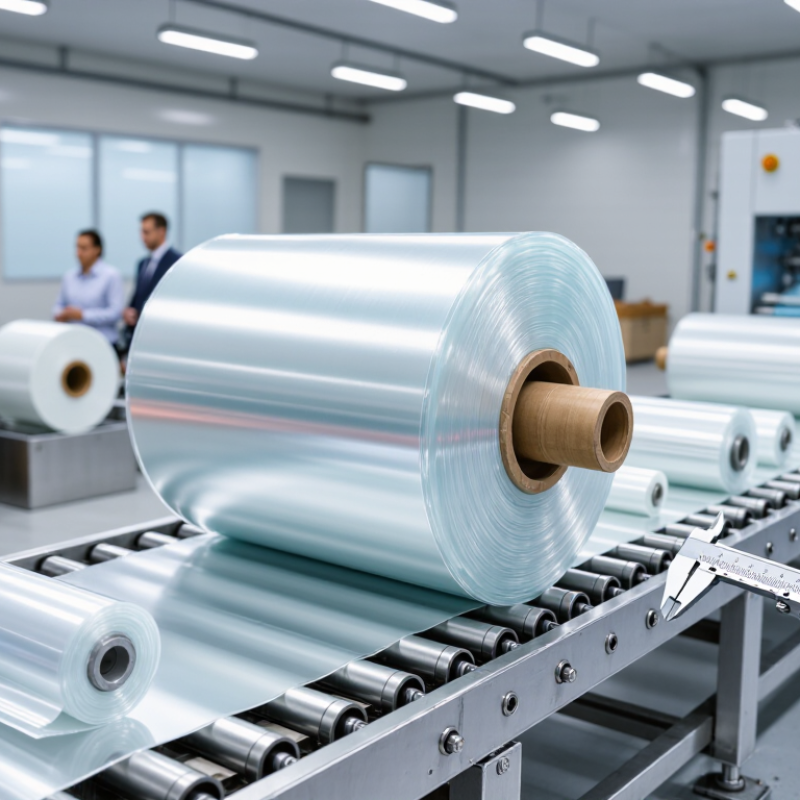
Amorphous PET film is polyethylene terephthalate with little or no crystalline structure. Its disordered structure lets light pass through, giving the film a clear, glass-like appearance. Typical properties include good tensile strength, dimensional stability, and resistance to moisture. Its glass-transition temperature is commonly around 70–80°C, though grade and test method affect the result. Clarity is not toughness.
PlasticsEurope’s Plastics – the Fast Facts 2024 report estimates global plastics production at 413.8 million tonnes in 2023. This figure describes the wider plastics market, not PET film output. For buyers, the distinction matters: “amorphous PET” alone does not specify thickness, optical quality, or performance under heat. A thin sheet may look clear yet distort during processing or warm storage. Small differences matter.
Tip: Request a technical data sheet and a sample from the intended production lot. Check haze, thickness tolerance, tensile properties, and temperature limits against your converting process. Ask how values were measured; methods can vary. Then test a sample on your own line. I would not rely on appearance alone. A clear roll can still behave poorly during printing, forming, or lamination.
Typical reference temperatures for understanding how amorphous PET responds to heat
Amorphous PET (APET) is PET with little crystalline order, which helps it remain clear and suitable for forming. Bars show approximate midpoints of typical temperature ranges: glass transition (70–80°C), cold-crystallization peak (120–160°C), and melting peak (250–260°C). Actual values vary with grade, processing history, and test conditions; confirm specifications with the supplier.
Amorphous PET film can serve clear packaging, labels, protective layers, and industrial laminates, but one specification rarely fits every job. Start with the product’s contact conditions, forming process, and end use. For a transparent pouch, clarity and consistent thickness may matter most. For a laminated part, surface treatment and bonding performance can be more important. Small differences show up quickly on a production line.
Tip: Match thickness, roll width, core size, and winding direction to your equipment. Confirm whether the film needs corona treatment or another surface option. Ask for haze, tensile, and thermal data when those properties affect performance. Keep the test method and measurement conditions with each reported value.
Check how the film behaves at the actual sealing or lamination temperature, not just at room temperature. If it will be printed, request a trial with your ink and drying setup. A sample roll is useful. Run it at your normal line speed and inspect for wrinkles, blocking, edge damage, or weak adhesion. These issues may come from handling or setup, not the film alone. Specifications can look complete and still leave gaps; agree on tolerances, inspection methods, and packaging protection before ordering.
Amorphous PET film can look uniform on a roll, yet small differences affect converting and final appearance. Check thickness in micrometers at several points across the roll, not just on a supplier’s specification sheet. Uneven gauge may cause wrinkles or inconsistent sealing. Small differences matter.
For clear packaging or display use, request haze and light-transmission data, then inspect a sample under the lighting used at your facility. A bright warehouse lamp can reveal cloudiness that a desk sample hides.
Tip: Compare samples at the same thickness. Ask for a test report showing thickness tolerance, clarity, tensile strength, and the test method used. Handle a sample on your own line if possible. Watch for stretching, edge tears, and feeding problems. A strong film is not automatically the right film; stiffness and forming needs vary by process.
Barrier performance deserves a practical check. PET film alone may not provide the oxygen or moisture protection a product needs, and results can change with thickness, coatings, or test conditions. Define the required barrier level and request data at stated temperature and humidity. Then test the finished package, not only the flat film.
Test before scaling. It takes time, and samples may not behave exactly like a full production roll. Recheck assumptions with your converter before committing to volume.
Global buyers should verify more than a supplier’s certificate. Request recent lot records for thickness, haze, tensile strength, thermal shrinkage, and roll-width variation. Ask for the test method, sampling frequency, and instrument calibration date. A clean-looking roll proves little. Small drift counts.
Check that declarations match the film’s intended use and destination market, including relevant food-contact or packaging requirements. Eurostat reported 186.5 kilograms of packaging waste per EU resident in 2022, making traceable material information increasingly important to buyers and downstream customers. Request resin and additive traceability, change-control records, and retained samples from production lots. A certificate alone can still miss a process change.
Production consistency is best judged across several shipments, not one approved sample. Compare certificates of analysis and defect logs, then ask how the supplier handles out-of-spec rolls and corrective actions. The OECD’s 2022 Global Plastics Outlook estimated that global plastic waste reached 353 million tonnes in 2019, with only 9% recycled. That figure covers all plastics, not PET film specifically, but it underscores why buyers should confirm recycled-content claims with documented evidence. Do not assume a larger factory guarantees steadier output. Check the records.
| # | Buying Tip | What to Verify | Useful Evidence or Checks | Buyer Acceptance Basis |
|---|---|---|---|---|
| 1 | Qualify the supplier’s quality controls | Confirm that incoming resin, film production, inspection, and nonconforming-product handling are controlled and documented. | Review the quality-system certificate and its scope, inspection procedures, calibration records, corrective-action process, and recent batch inspection reports. | Assess the controls and records against your supplier-approval process; verify certificate validity and scope independently where appropriate. |
| 2 | Define the film specification before ordering | Specify film type, thickness, width, roll length, surface finish, color or clarity requirements, and any treatment or processing requirements. | Request a technical data sheet and a sample roll. Check thickness with a calibrated gauge and review agreed methods for properties such as tensile strength, haze, and light transmission. | Set numerical limits, test methods, sampling frequency, and permitted variation in the purchase specification; do not rely on terms such as “standard quality.” |
| 3 | Verify regulatory suitability for the end use | Confirm whether the film is intended for food contact or another regulated application, and identify the destination market and actual conditions of use. | Request a current, product-specific declaration of compliance and supporting migration or other test information. For food-contact applications, assess applicable rules such as EU Regulation No 10/2011 or relevant US FDA requirements, including 21 CFR 177.1630 where applicable. | Check that the material, intended use, contact conditions, and supporting evidence match the requirements in each target market. A general statement of compliance may not cover every use. |
| 4 | Check production consistency across batches | Look for stable thickness, width, roll length, and mechanical or optical properties from one production lot to another. | Compare certificates of analysis from multiple lots. Ask how online thickness monitoring, process checks, and batch traceability are recorded. | Agree measurable tolerances and a lot-release plan in advance. Review trends across several batches rather than approving quality from a single sample alone. |
| 5 | Set clear appearance and defect criteria | Define acceptable levels for gels, specks, scratches, wrinkles, edge damage, bubbles, and other visible defects that could affect conversion or finished-product appearance. | Inspect samples under agreed lighting and viewing conditions. Request defect classifications, inspection records, and representative roll samples. | Document defect types, inspection conditions, sampling approach, and rejection limits. Apply consistent criteria to both trial material and repeat shipments. |
| 6 | Test processing performance on your equipment | Confirm that the film suits the intended process, such as thermoforming, printing, sealing, or lamination, and the actual operating conditions. | Run a production trial using the intended tooling and process settings. Record forming behavior, web handling, sealing or adhesion results where relevant, and scrap or defect rates. | Approve against documented end-use and line-performance requirements. A laboratory data sheet or small hand sample cannot fully predict performance on a production line. |
| 7 | Protect rolls during shipping and maintain traceability | Check that rolls are protected from moisture, dust, impact, and handling damage, and can be linked to their production lot. | Review packaging and palletization details, core and edge protection, roll labels, lot codes, packing lists, and the supplier’s process for investigating shipment claims. | Agree packaging, label fields, storage and handling instructions, and required shipping documents before dispatch; retain lot information for incoming inspection and any later investigation. |
A low price for amorphous PET film can hide differences in thickness, width, roll length, or winding quality. Compare quotations using the same specification and order volume. Ask whether the price includes slitting, protective wrapping, pallets, and delivery to your destination. Small differences add up.
Logistics affect the usable cost. Confirm lead time, shipment frequency, minimum order quantity, and loading plans before placing an order. For long-distance shipments, check that rolls are protected from moisture, dust, and edge damage. Request photos of pallet packing or inspect a trial shipment. Freight estimates can change; leave room for that.
Reliable supply takes more than a good first delivery. Ask how suppliers manage production capacity, raw-material availability, and unexpected delays. Review quality records from several batches, not just one sample. Agree on acceptable thickness variation and a process for reporting defects. Keep a modest buffer for production needs, but avoid overstocking film that may sit unused. Forecasts help, though they are rarely perfect. Revisit them regularly. A simple delivery log can reveal recurring delays or quality shifts before they disrupt production.
Measure several points across the roll in micrometers. One reading is not enough. Uneven thickness can cause wrinkles or inconsistent sealing.
Request haze and light-transmission data. Compare samples at the same thickness, then inspect them under your facility’s lighting. Bright lamps can reveal cloudiness.
Not always. Stiffness and forming needs vary by process. Test a sample on your own line and watch for stretching, edge tears, and feeding problems.
Define the oxygen or moisture protection your product needs. Request results with stated temperature and humidity, then test the finished package. Flat film alone may not tell the whole story.
Ask for recent lot records covering thickness, haze, tensile strength, thermal shrinkage, and roll-width variation. Check test methods, sampling frequency, and instrument calibration dates.
No. Request resin and additive traceability, change-control records, and retained production samples. A certificate can miss a process change.
Compare several shipments, certificates of analysis, and defect logs. Ask how out-of-spec rolls are handled. One approved sample proves little.
Request documented evidence and confirm what the claim covers. Avoid assumptions. Records may still leave questions, so review them carefully.
Amorphous Pet Film is a clear, versatile polyester film valued for its formability, toughness, and consistent appearance. Choosing the right material starts with understanding how it will be used, whether for packaging, printing, thermoforming, or an industrial application. Buyers should match the film’s grade and specifications to the product, processing method, and expected conditions rather than relying on a general-purpose option.
Compare thickness, clarity, strength, and barrier performance against practical requirements, and ask suppliers for clear, current product data. Check quality controls, relevant compliance documentation, and evidence of consistent production between orders. Finally, assess the full cost, including shipping, lead times, minimum order quantities, and storage needs. A dependable supplier should communicate clearly and support stable long-term availability, helping buyers balance performance, budget, and supply continuity.
